Autumn School — 4th edition

Syntheses in
Theoretical
Community Ecology

Coexistence Dynamics Networks Complexity
October 12–17, 2026
French Pyrenees
Early-bird deadline
May 31, 2026
Fee: 700 € — save 50 €
Application deadline
July 31, 2026
Regular fee: 750 €
Selection announced
August 7, 2026
School dates
Oct 12–17, 2026
Arrival from Sunday Oct 11, 16:00

The School

The 4th INTP Autumn School "Syntheses in Theoretical Community Ecology" will take place from October 12 to 17, 2026 in Ariège, in the French Pyrenees, hosted at the INTP campus in Surba.

Every edition draws on the previous ones to progress toward a more unified perspective on theory in community ecology. The program is constructed jointly by the lecturers, revisiting a broad spectrum of topics — from niches to networks and invasions — in order to emphasize the many explicit or hidden connections and tensions between leading theoretical approaches.

The goal is for each attendee to take a step back from their accumulated knowledge, and formulate a synthetic and critical viewpoint on the field's current state and open questions.

Who should attend?

The school is mainly intended for researchers (including graduate & post-doctoral) with prior experience in theoretical community ecology, complex systems and adjacent fields. Practical knowledge of modelling (e.g. dynamical models, numerical simulations) will be assumed.

Applicants with interdisciplinary skills — physics, mathematics, computational science — fitting these criteria are especially welcome. We encourage applications from any country and diverse personal backgrounds.

Fees & Accommodation

Total fees cover tuition, scheduled activities, shared accommodation (2 people/room) and vegetarian meals throughout the school.
Reach out to us to set up other options (e.g., single room, family-friendly setup).

Before July 31, 2026
750
Regular fee
Optional mountaineering activities with a local guide (extra fee):
Rock climbing · Canyoning · Via ferrata

1 activity: €50   2 activities: €90   3 activities: €120

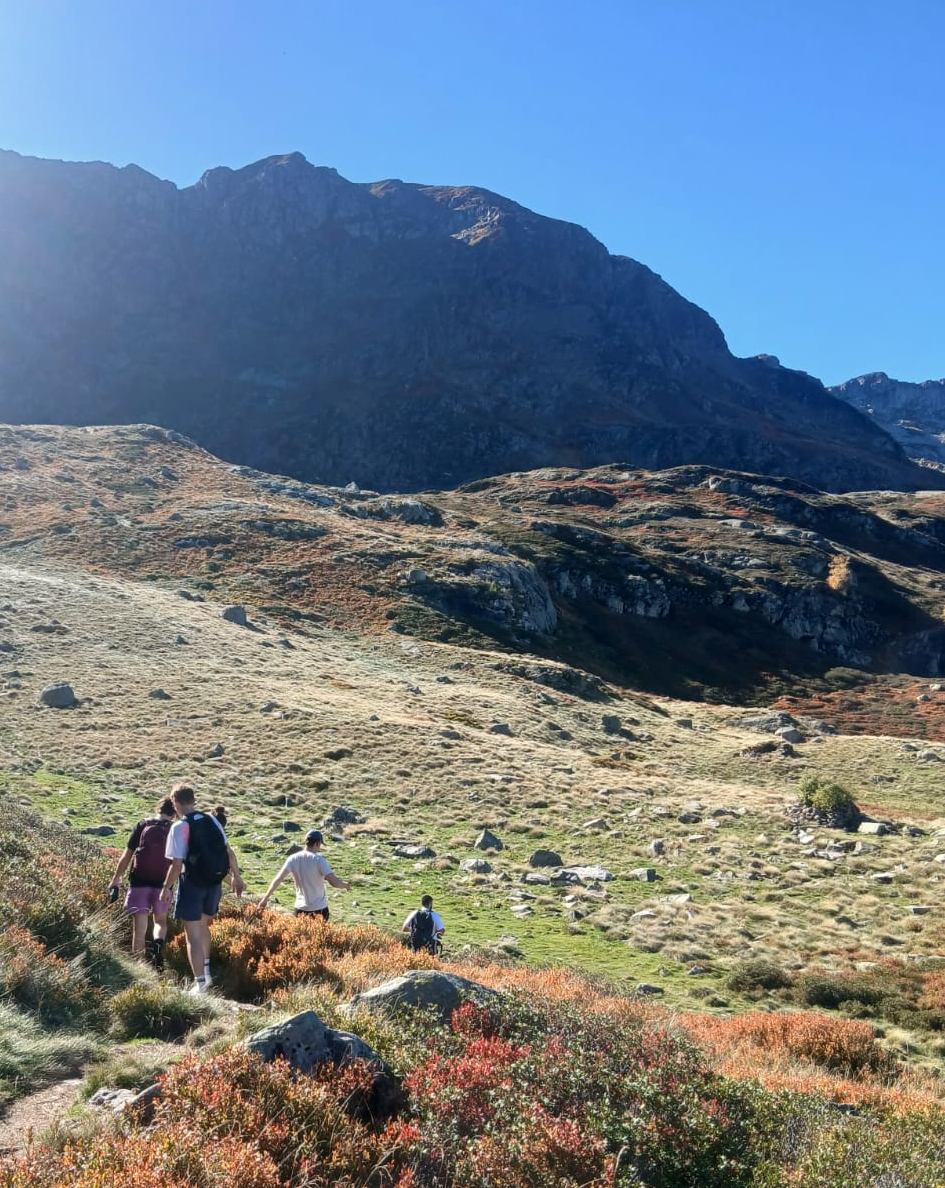
Participants can also self-organise: hiking, prehistoric caves, neighbouring cities.

Participants lacking academic funding and facing financial difficulties may contact us to discuss the possibility of a scholarship. Participants are responsible for travel costs.

Lecture Plan

Ten lecture blocks, jointly designed by the teaching team, revisit the full spectrum of theoretical community ecology with an emphasis on connections, tensions, and syntheses.

Lecture sequence
Daily schedule (Monday – Friday, Saturday morning)
09:00 – 12:30Lectures
14:00 – 17:30Free time & optional outdoor activities
18:00 – 19:30Scientific activities — discussions, journal clubs, practical sessions

Sunday Oct 11: arrival from 16:00. Saturday Oct 17: closing at 12:30.

Application

What to send

  • A current academic CV
  • A short cover letter (max 1 page) detailing your background in community ecology, interest in the school, and if relevant, your motive for requesting a scholarship
Send application →

[email protected]

Deadlines

Early bird: May 31, 2026 — fee 700 €

Register before May 31 to benefit from the 50 € discount. Places are limited; early applications are encouraged.

Regular application deadline: July 31, 2026

Selection notification: August 7, 2026


More info

Visit the INTP website for more context on past editions and the research collective.

intp.science ↗

Location

The school takes place at the INTP campus in Surba, a small village in Ariège, nestled in the French Pyrenees.

Surba is accessible by train from Toulouse (international airport), approximately 1h45 by regional train. The INTP campus offers a peaceful setting conducive to focused learning and informal scientific exchange — surrounded by mountains with many opportunities for outdoor activities.

Address:
173 route de la Courbière
09400 Surba, France

Full directions ↗

Lecturers

The program is constructed jointly by the teaching team, with each edition building on the previous ones toward a more unified synthesis of the field.

University of Florida
INRAE

Previous editions